Tuesday, April 21, 2015

Is Your Food (Nutrient) Dense? And A Nutrient Dense Kid's Breakfast


I plan to keep my kids orthodontia-free.  This morning breakfast is one of the steps toward this accomplishment.

Many people are unfamiliar with the work of Dr. Weston A. Price, a dentist who traveled to primitive locations to study the dietary practices and dental health of indigenous populations.  In his travels, Dr. Price discovered that nutrient-dense diets, or a lack thereof, have an incredible impact on tooth decay as well as proper tooth formation, spacing, and facial structure.  He also noticed that these people were free from the degenerative diseases so common in Western society.

But what does "nutrient dense" mean?  It is easy to confuse this term with "healthy food", but not all healthy food is nutrient dense.  This article from Wise Traditions indicates that, "“nutrient-dense” should refer to the density of nutrients in a food, adjusted for bioavailability.  This could be measured per gram, per calorie, or per unit volume, depending on a person’s particular needs.  Since nutrients are essentially worthless if they aren’t absorbed and utilized, the term should incorporate bioavailability."  

Unfortunately, the Standard American Diet is extremely devoid of nutrient density.  A majority of our dietary intake is from grains, especially genetically modified and horribly processed grains, and our grains are not properly prepared to decrease anti-nutrients and increase the availability of absorbable nutrients.  Grains have replaced nutrient dense foods including the important fats, especially animal fats, that we have scorned.  In addition, for cooking we have replaced these natural, high-heat fats with processed, rancid vegetable oils.

The traditionally dense animal foods Americans do include - meats, fish, eggs, and dairy - are altered and unhealthy.  They come from CAFOs with disgusting conditions.  The EPA defines CAFOS as, "agricultural operations where animals are kept and raised in confined situations. AFOs congregate animals, feed, manure and urine, dead animals, and production operations on a small land area. Feed is brought to the animals rather than the animals grazing or otherwise seeking feed in pastures, fields, or on rangeland."  Animals do not live they way God intended.  They are not outside in the sun, they do not forage for their natural diet, and they live in their own filth, breeding grounds for disease.   Their poor healthy means poor nutrition in the product and, therefore, poor nutrients for the consumer.  Furthermore, these animals are given antibiotics to stave off disease, hormones to fatten them up, and genetically modified grains that are not a part of their natural diet.  Besides the concern regarding lessened nutritional value, we also ingest some of the antibiotics and hormones.

Due to horrible animal conditions, dairy has to be processed in order to get rid of disgusting germs present in the milk due to cow illness or contaminating pathogens from fecal matter.  This also kills the good bacteria that helps us digest our milk and provides the health benefits we expect from milk.  Raw milk from healthy cows is incredibly good for you, but most cows do not have healthy conditions that allow their milk to be consumed raw (nor would it be beneficial).  This website explains that the health of the cow and environment are crucial to the safety of raw milk: "Raw milk is essentially sterile in healthy cows. It's not contaminated until after it comes out of the cow, and that's what really matters as to whether it will contain ‘good' or ‘bad' bacteria. If the milk is contaminated with fecal matter, there will probably be pathogens in the milk at some level, along with other contaminants normally found in dairy-type environments. Fortunately, these other contaminants are found in much larger numbers than are pathogens, so they often will out-compete them."

Due to the fear of fat, dairy has been further-processed to remove the important, healthy fats that keep our blood sugar stable and provide us with the all-important K2 vitamin.  Below you see the graph from Wise Tradition's article that diagrams the density of this vitamin in different types of dairy.


I could continue with the disappearance of nutrient density, but the simplest explanation is we have handed our health over to government and big industry, jumped into nutritional fads and convenience foods, and forsaken the traditional diet of our ancestors.

The Wise Traditions article indicates that our diets, devoid of organ meats, animal fat, and egg yokes cannot be considered nutrient dense.  We should strive to make these foods a common part of nutritional intake and, if you need an extra reminder or guide, you can use this handy chart to help fill your body with fantastic foods that will help you prevent and/or recover from disease.

So, where was the connection with orthodontia?  Dr. Price found that people who ate the traditional diet of their ancestors had little to no tooth decay, spacing issues, and structural deformities.  These people, in no way, would have ended up sitting in the dental chair having a doctor painfully tightening the metal glued to their teeth (can you still feel that feeling? - make me shudder!).  I am determined that I will provide my children with a nutrient dense diet to correct the poor health I passed on to them and give them the nutrients needed to grow traditionally strong.

We eat a lot of nutrient dense foods in our house.  Pastured pork lard is a cooking staple, we all take fermented cod liver oil in the evening, sauerkraut is paired with our pork and beef, we've added raw, grass-fed dairy and liver to our routine.  We strive to have fresh, wild caught fish a couple times a week (pretty small portions, though, thank to the expense), our meat is pastured and free from hormones and antibiotics, and Mark and the kids have eggs from healthy, pastured hens on a regular basis (egg yokes are first on the list of foods to add back in when I am doing better).  We try to keep infrequent desserts nutrient dense as well, focusing on raw milk ice cream made at home with lots of good cream.  Now, with James still on the mend from his trip to the ER, I decided to make the kids a "super omelet" to help get him back on track and continue to boost Rita's health.

I started with three eggs, a dash of raw milk, and added everything I could: basil, tomato, garlic, bell pepper, collard greens, and small hunks of liver.  Then I cooked the omelet in a cast iron pan to perfection, sprinkled it with real salt and, voila!  A perfect, nutrient dense meal that the kids (ok, the one that actually eats) loved.


It may be daunting to begin the process of "densifying" your diet.  It has taken us two years to get to this point.  But, I can't argue with the results and I cannot wait to see how our health continues to improve in the years to come.


Friday, April 17, 2015

Have Your (Properly Prepared) Grains and Eat Them Too!

This day has been a long time coming....not for me but for the kids.  Today was their first experience with "properly prepared" grains.  All the articles on anti-nutrients, ease of digestion, and availablity of nutrients led to this morning's grain-covered chairs, floor, door, and bathroom.  Oh, and kids.  Yeah, it was all over them, too.

What was the preparation process for the grain apocalypse?  Selection and preparation of grains.

Grains are naturally high in anti-nutrients that make them difficult to digest (legumes and nuts have this problem as well).  There are methods to counteract this and the one I used for this morning is soaking.  Soaking is an extremely easy process and uses liquid, warmth, acidity, and time to break down the anti-nutrients.  Here's what I did.

I selected a grain that is considered very high in nutrients and lower in digestive concerns: teff.  Then, last night, mixed the grains with yogurt and a dash of kefir.  This acidic medium helps break down the anti-nutrients in the grain.  I simply let it sit overnight and spooned it into a bowl for the kids this morning.

Soaked and ready-to-go - so I thought.

However, I realized I made a mistake.  My rookie self didn't think about the fact that these grains need to be cooked!  This didn't deter Rita, but I'm hoping it won't cause digestive distress.  Next time, I plan to soak the grains in a lemon-water mixture, hopefully sprout, and then cook them before soaking in the yogurt.

Rita loved the teff concoction.  She preferred to forgo the spoon and use her hand as a shovel to get it in her mouth.  We were all ready for bath time after breakfast (although, James was mostly covered in prunes).  Considering how small the teff grains are, I'm not looking forward to the kitchen clean-up.  And I may find tiny grains stuck to baby hair for the rest of the day. 


In our house, the goal is to sprout and ferment all our grains.  This was my first attempt at increasing the digestibility of grains, Rita's first grain meal, and James's first in a long time.  As my school year come to a close and I have more time I plan to get a sprouting jar for any grains we plan to use.  My main goal for the summer is to make sprouted einkorn flour sourdough bread for the family.  The kids and I don't eat bread (and, as I am in the process of uncovering my gut issues, I won't for a long time), but Mark does on a regular basis and, I hope, with well-prepared grains, the kids can join him.  We buy a fermented bread made fresh at Wegmans (it was still warm when I picked it up last week!), but I'm sure making it myself will be much healthier (and hopefully cheaper).  My sourdough starter culture has been sitting in the cabinet taunting me for a long time!

We choose einkorn berries for our flour because it is an (the only) unadulterated wheat.  Modern wheat is genetically modified.  We purchased einkorn flour over a year ago and loved the taste - super delicious!  In the future, I will purchase the berries and prepare them myself because as soon as flour is ground it starts to loose nutrients.  And, with berries, I can prepare our flour traditionally.

It is important to note that those with compromised gut-health will, most likely, need to avoid grains.  Even with the best preparation (sprouting and fermenting), most grains still have anti-nutrients which can aggravate an un-healthy gut.  Grains are not an essential part of a healthy diet.  If you struggle with seasonal allergies, consider eliminating grains (not just gluten) from your diet (and pasteurized dairy for that matter).  In the two years since my dietary changes my once terrible spring allergies are non existent.  Unfortunately, thanks to a gut imbalance, I am mildly impacted by allergies this year.  I plan to eliminate all sugar (no honey or maple syrup, even in small amounts) and most fruit and starchy vegetables to help my gut get back on track.  And, I'll continue to consume a nutrient-dense diet and probiotics.

Friday, April 10, 2015

Pizza Sauce for a B-day!

Looks like real pizza, doesn't it?
Yesterday was Rita's first birthday.  I felt bad that things were a little chaotic.  We had a follow-up with James's pediatrician after his discharge from the hospital.  I felt like I was playing catch-up.  We didn't have anything ready except an extra-large slinky (which she loved).  But, she did get to enjoy breakfast before we left and she was really happy with it: asparagus (a new food for her), butternut squash, and plantain pancakes.  Yum!  We met my family at Toys R Us to test out trikes - Rita loved that!

I wanted to make something special for her birthday dinner.  She loves feeding herself so I wanted finger foods.  I've had a pizza sauce recipe in the back of my head for a little while and determined to make pizza work (especially since we have yummy raw cheese in our fridge).  One of the first times I tried fennel I thought it had a hint of the spicy taste of pepperoni.  Call me crazy, but I swear it's there.  I took the basic concept of Mickey Trescott's pizza sauce in the Autoimmune Paleo Cookbook (she uses a base of beets and carrots) and tried my own version.  We all loved it, but Rita wasn't having it (although, she loved her broiled pears and caramel dessert - I didn't have the time, energy, or creativity for a cake.  We'll do that Sunday.)!  I think she was pretty pooped from all the excitement of the day.

So, here it is!  A fantastic, tomato-free, pizza sauce!  Soon, to be followed by our fantastic, grain, coconut, cauliflower, plantain-free AIP crust!

AIP Pizza Sauce

Ingredients:

1 purple beet
1 fennel bulb and stalks
2 T lard, softened (or butter, or coconut oil - I don't used olive oil because it goes rancid when heated)
1/4 cup chicken stock
1/2 tsp real salt
10-15 large fresh basil leaves, chopped small

1. Chop purple beets.  Chop fennel bulb and stalks, but reserve on stalk for pizza topping.  Boil on high until soft, about 30 minutes.  Drain excess liquid.
2. Place in food processor with lard and chicken stock and blend until smooth.
3. Add salt, and basil.  Combine.
4. Ladle onto your favorite pizza crust!

Let me know what you think!

Monday, April 6, 2015

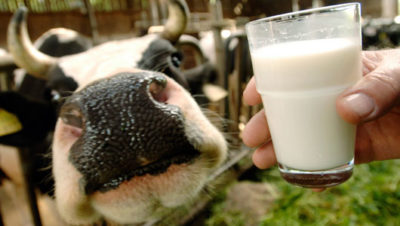
We Bought (a Share of) a Cow

Image source: offthegridnews
As I strive to reverse autoimmune disease, I've struggled with how to eat.  I truly believe in the nourishing and healing power of food and know that dietary changes and additions can be a great beginning in the process to reverse disease, and, sometimes, all that is necessary.

I tried a few dietary protocols over the Fall and Winter with varying degrees of success.  I discovered that, for optimal health, I had to combine several protocols, which left me a very limited amount of foods I could eat.  Even with these protocols, I struggled with significant bloating and unexplained weight gain.  I was so frustrated and didn't know what to do!  I let myself relax my dietary restrictions slightly as it became apparent how much stress impacted me physically.  I let myself have some raw dairy again and added in one pseudo-grain, buckwheat.  I tried a high-histamine/AIP-forbidden tomato here and there and used a little onion in my cooking.  It was really hard to tell how these foods affected me because my bloating and intestinal pain was constant.

As I struggled with these problems, I tried to figure out WHERE TO GO from here.  I've had a milk fast in the back on my mind for almost a year now and decided now would be a good time to try. Thanks to blood work a few months previous, I knew that my liver was overloaded, not working properly, and that my body was unable to process the histamines that digested food produces (some foods are higher histamine than others which is why I maintained a low-histamine diet).  A liquid diet could help give my liver, and digestive system, a break and let my body concentrate on the healing it needed.  Unfortunately, the traditional resource, bone broth, was not in the cards as it is a high-histamine food.  I'd read about the healing properties of a raw milk fast, especially regarding Lyme's disease.  I decided it was time to take the plunge.  I knew, however, that this probably wouldn't be a cure (hence using the term "fast" or "detox" instead of the linked article's use of "cure") for me.  I don't have official diagnoses to "cure" and didn't have blood work done at the beginning and end.  I simply intended this to be a help to flush my liver and aid my body's healing.

Why (raw) milk?  First, for any detox of this type, the milk must come from grass-fed cows and must be raw.  Otherwise, don't bother!  You will probably make yourself sicker.  Pasteurization denatures the proteins in milk, making it difficult to digest, and depletes the nutrition in the milk.  Grass-fed cows eat their natural diet (grain is not a natural food for cows!) so they are healthier and, therefore, provide higher quality milk.  Grass-fed cows, usually, come from hygiene and sustainably-conscious farms, but, of course, you should always check and know your source (this is really important with raw milk - most of the milk on the shelves MUST be pasteurized because the cows are fed bad diets, kept confined, and have infected udders - think mastitis pus in your milk - eww, and are pumped with antibiotics, killing their gut and any beneficial bacteria you would get in the milk)!  Ok, now we can talk about milk's benefits.  Just like human breast milk, cow's milk is a complete food containing essential fatty acids, vitamins and minerals, and fat-soluble vitamins.  This article gives a good summary of raw milk's benefits.  This article gives you a basic background on why raw (most of this paragraph is a summary from this article).

So, the plan.  I would drink 3/4 - 1 gallon of raw guernsey milk each day.  I would drink water, if necessary ('cuz that's a lot of milk - not much extra hydration needed!).  That's it.  I decided that, as I went, I could tweak things, but this was my starting point.  I signed up for Golden Valley Guernsey's milk share, essentially buying a share in a cow that is collectively owned.  The farm handles all the work (hence the "boarding" fee) and delivers my milk to one of the drop locations.  There are a couple raw milk share farms in our area (this is the only way to legally buy raw milk in Virginia), but I chose GVG for a simple reason: their breed.  Guernsey cows provide better milk than Jersey and Holstein breeds.  Their milk contains almost 100% of the A2 milk protein  (the protein in goats milk which makes goat milk easier to digest) instead of A1 (hard to digest cow milk protein), has a higher fat content (important since I've had blood sugar issues in the past), a better balance of omega 3 to omega 6 (this imbalance is killing America), and higher vitamin levels.  

Here's what happened.  First of all, their milk was absolutely delicious.  Secondly, their milk was incredibly filling (I thought I would be hungry and craving food - this was not the case).  I ended up only drinking about 1/2 gallon per day.  Initially, I started drinking 16-30 oz 3-4 times per day.  I had significant gas for a couple days and decided to warm my milk instead - that really helped (warm milk is supposedly easier to digest - worked for me!).

Pre-detox symptoms: Brain "fog", tired, join pain, bloating/intestinal inflammation

Days 1-3: Significant detox symptoms: sore throat, exhaustion, gas, increased phlem
Day 4: Appetite began to increase and detox symptoms began to disappear
Day 5: Drank 1/2 gallon of milk and had a small snack of carrots and kale cooked in lard w/ lots of salt - could tell adrenals needed salt - stressful day!!!
Day 6 and 7: continued with 1/2 gallon+ of milk - detox symptoms gone, better energy levels, no more brain fog.
Day 8: It was a Sunday in Lent so I let myself have one meal with Mark consisting of small portions of salmon, broccoli, cauliflower w/ parsley and butter, and cabbage.  I noticed bloating was significantly down and I was losing about 1/2 pound every couple days.
Day 9 and 10:  Stressful days, drank more than 1/2 gallon and had a small veggie snack with salt and fat; inflammation flared up due to stress (the effect of stress on my body was confirmed by this detox).   Added fermented cod liver oil for immune boost - kids starting to get sick.
Day 11-14: Increased intake slightly.  Unfortunately, we're all sick.  :(

End benefits (this is part of the testimony I wrote for GVG the day after I completed the detox):  My sleep became more regular and restful and my brain fog went away.  Scars and inflammation on my face from the original autoimmune flare two years ago began to fade and I cannot believe how much better my skin looks.  My intestinal inflammation significantly decreased and I lost five of the ten pounds of unexplained weight gain.  Most importantly, the most frustrating aspect of my autoimmune problems/histamine intolerance, joint pain, is gone.  My energy level is, generally, better and I feel, mentally and emotionally, more like myself, not someone “controlled” by pain.  Now, at the end of the detox, I plan to incorporate Golden Valley’s milk into my healing diet so that I can continue to heal my gut and reverse autoimmune disease.  As I move forward I am very thankful for the healthy relationship this milk detox created between food and myself.

One of the surprise benefits of this detox was what I refer to in the last line - a better outlook on and relationship to food.  I feel empowered when I eat.  I am helping my body, nourishing it with good food, helping repair damage.  This means that I've learned to resist the urge for comfort food and stress eating.  I find myself eating slowly, taking smaller portions, and making rational decisions to nourish my body, not my emotions.

I did have a couple negative side-effects.  One was slight constipation.  I believe this is related to a thyroid issue and I didn't have enough time to help reverse this issue.  The second was more significant, candida overgrowth.  I knew this was a possibility as I've suspected gut dysbiosis in the past.  This, however, was never confirmed so I didn't worry about the increased carbohydrate intake throwing off my gut flora.  It is hard to tell if the dysbiosis was entirely from the milk or if a large part of it was from the illness - I didn't notice the growth on my tongue until the day after I completed the detox.  Luckily, this is a pretty easy fix.  For now I will eat a lower-starch diet to starve the yeast, take a powerful, native probiotic (native means the good bacteria will actually colonize your gut, unlike most probiotics that help and are then flushed out of your system), and take a couple drops of oregano oil with my water each night.  Once I am done nursing, I hope to pursue more avenues to permanently reverse this issue, instead of balancing it with food.

Unfortunately, as I suspected, the inflammation has returned, but not to the pre-detox degree.  I have yet to see if this is stress inflammation (Rita has been pretty sick and not sleeping - stressful!) or dietary inflammation.  I did notice intestinal pain after my first meal - cucumber and liver pate.  I've generally avoided raw foods on the advice of the GAPS protocol which advises only cooked foods for a year to help with digestion.  I have yet to determine if the raw cucumbers were the culprit - the liver pate was all foods I usually tolerate well.

I am very happy with the results of this detox.  The disappearance of my joint pain and fatigue, along with the emotional triumph of controlling how I eat, is life-changing.  I hope to find a good, holistic MD in the near future who can give me a proper diagnosis so I can target the specific areas that need to heal.  If I get my gut dysbiosis under control I would love to do this detox again.  Most days my stress levels plummeted because I did not have to worry about how to fit my complicated meals into a day of caring for two little children.  I loved being able to easily pack my lunch in a thermos - no more frustration of what cooked food travels well and can be eaten cold.  It was very freeing and, going forward, I will definitely have a raw milk meal (or snack) on occasion.

I am moving forward.

Saturday, February 21, 2015

Fennel Stir-Fry

This blog just stopped.  As much as I enjoyed posting successful recipes to share with those in similar situations, things at home became too overwhelming to keep it up.  But today, on a peaceful snowy day with the husband home from work, I can post today's success.  Fennel stir-fry!

Before the recipe, here's the update.  My 30 day AIP diet went really well, however, I wasn't seeing the improvements that I'd hoped.  My nutritionist realized that I was having a reaction to histamines in my foods.  That meant that the high-histamine, gut-healing foods were actually making my inflammation worse.  Now I've mixed AIP with a low-histamine diet and things are improving.  I haven't entirely decided where to go from here, but things are going ok for now.  It is hard to take out another category of foods so I'm being a little more lenient on some foods that are not ok on AIP, but I don't have a strong reaction to.

With the new challenges I am trying to maintain good variety in my diet which isn't easy.  I was so bored with my typical lunch today that I decided to try something new.  I am not really familiar with fennel so I tossed a bunch of things together and hoped it would go well - it did.

Fennel (to me) looks like a human heart with celery sticking out of it!  More importantly to cooking, it has a licorice taste which, originally, turned me off as I've never been a fan of that flavor.  My mom's fennel experiments encouraged me to try again and it was really worth it!

Here's what I did:

Fennel Stir-Fry

1/3    fennel - bulb, stalk, and fronds
2 T   chopped onion (you are welcome to add more, I use very little because it is a FODMAPS)
3       basil leaves, chopped
1/4    cup cauliflower heads
2 T   lard
1 T   butter

I threw everything in together except the basil.  You are welcome to use more or less lard and butter, choose one instead of both fats, or use another fat altogether.  I like the taste that mixing fats gives.  I sauteed the food with leftover turkey breast until almost cooked, threw the basil in, and continued to cook until the veggies and turkey were browned.  I loved the result, let me know if you do, too!


Saturday, December 6, 2014

Spiced Banana "Ice Cream"

Things have gone pretty well this week (except for a mishap with non-pastured bacon).  But, by Saturday night I was pretty ready for a treat.  I was really tempted to break out the AIP-friendly coconut, but knew my gut wouldn't be happy tomorrow morning (it doesn't know that coconut is supposed to be ok for me).  So I added tigernut and waterchestnut flours to my Amazon bag to be purchased tbd and decided to try banana ice cream.  I started simple:

2 bananas
1 tsp cinnamon

When blended it tasted delicious.  I wanted to be a little more adventurous and, since I probably wouldn't have time for treats for awhile, I tried the following:

3 Bananas (brown)
1 T Cinnamon
1/4 tsp salt
1.5 tsp orange infused raw honey

1. Blend ingredients until smooth (unless you like banana chunks in your ice cream!).
2. Place in ice cream maker for 10 minutes.

***This is REALLY spiced.***

I had some techinical issues with the ice cream maker because the batch wasn't big enough to freeze well and it was really thick.  So, I added the juice from half an orange and tried again.  But, some of the "ice cream" had already frozen to the bottom and sides and prevented the interior arm from moving freely.  So, until I can find a version that isn't so thick I will just stick it right in the freezer after blending.  A machine-worthy version will have to be my next test.

Happy (almost) Sunday!

Wednesday, December 3, 2014

D-day

Today is day one of my official AIP journey. Over the last couple months I listened to my body and eliminated foods I struggled with. My problem foods I discovered that are allowed on AIP included coconut and a couple later stage foods like dried fruit (😞 dates) and tapioca flour. So, I've given up the baking for now, but keep hope alive. It won't be forever. 

So, the plan is to live the next twenty one days on strict AIP (and mostly low FODMAP) and then listen to what my body needs. I hope it will be ready for me to reintroduce some foods, but I'll just have to wait and see. I was telling my nutritionist last night that I can feel my body reacting to just the idea of certain foods which has been a great guide and the impetus for this push. And I know most (probably all) of my binge eating is stress-related. So I am also working on de-stressing my life and teaching myself to react well to stressful situations. In the past I did not struggle with stress the way I do now, but I think I used up my quota of even keeled me during my son's hospital stays and weaning from his feeding tube. It was the winter we got him off the tube that my body first turned on me. After stressful situations (like getting the whining children out the door to James's school) I am just exhausted which is a key indicator of adrenal fatigue so, that's still there. So...here goes!

So what did I eat for breakfast today?

How does that look?  ðŸ˜„ It tasted fantastic and I was proud of the amount of veggies, fat, and salt I was able to get into it. The base is stripped pumpkin (stringy, although ours didn't look as much like spaghetti this time, more like rice) that I tossed with boiled kale, grilled broccoli, and pork fat. This was a "leftover" breakfast so the veggies were previously cooked and really easy to throw together and pair with our simple sausage. I love playing around with these stir-fry-type dishes. 

When my husband bakes the pumpkin last night I jumped at the chance to purée it. I'm sad that I can't enjoy all the yummy pumpkin baked goods this fall, but I whipped up a pumpkin dessert last night that was mighty tasty. I don't have a picture but here is the recipe:

Pumpkin Custard

1 cup baked pumpkin
2 tsp grade b maple syrup
1/4 each salt, cinnamon, and vanilla 

1. Place baked pumpkin in food processor and process until well-pureed. 
2. Add the rest of the ingredients and process for another couple minutes to get a more fluffy consistency.
3. Enjoy!

We split this into two small servings so there wasn't sugar-overload. Next time I'll try adding some gelatin and will let you know how it goes.